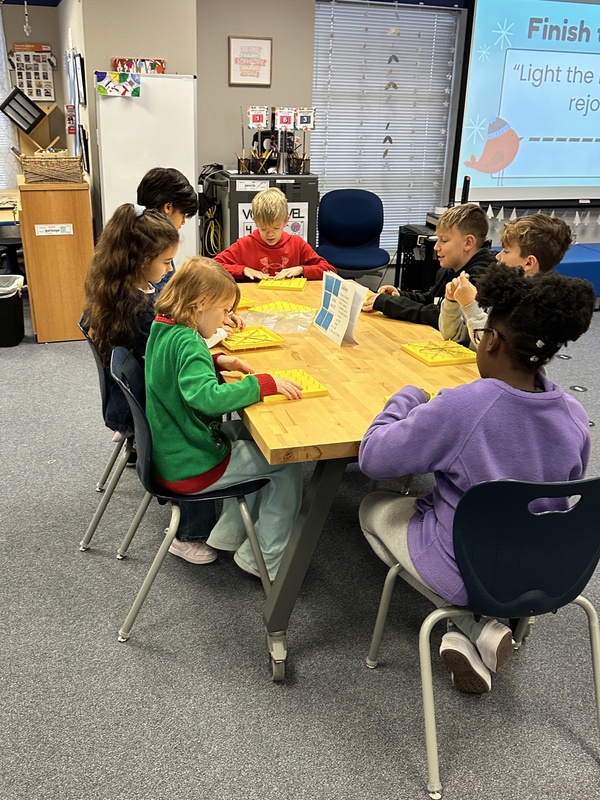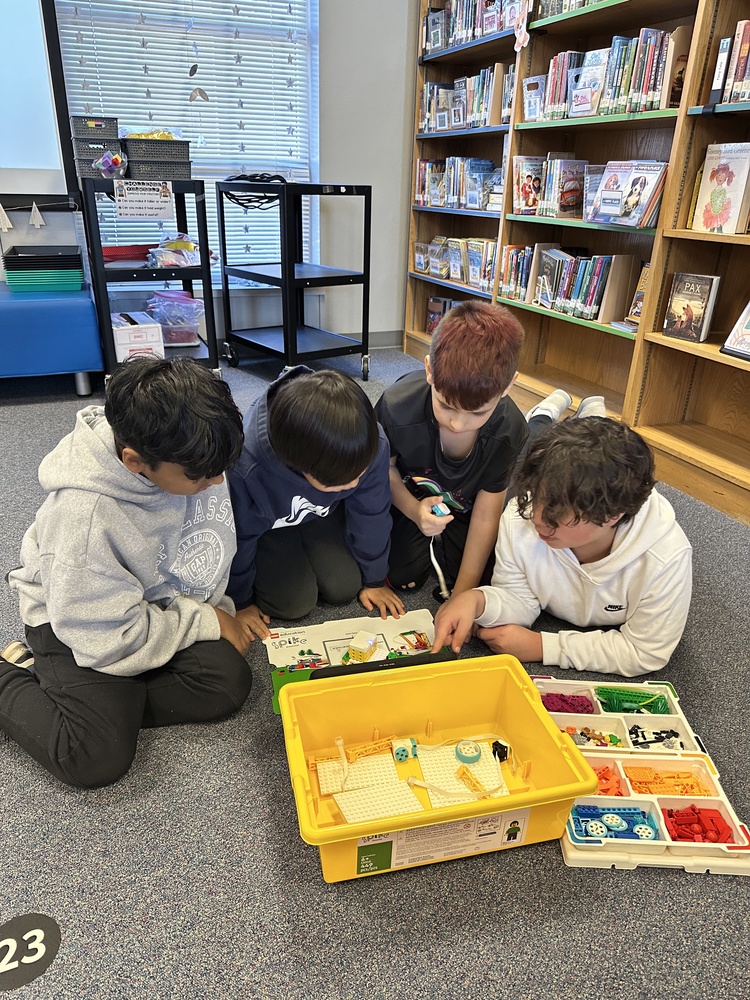
Bennett Elementary students were able to celebrate the Hour of Code and AI this week through various challenges. The Hour of Code started in 2013 by Code.org. The goal was to make computer science and related skills accessible to all ages through engaging one-hour activities. It has grown into a global movement and this year, Code.org adjusted their goals to include a focus on artificial intelligence (AI.) Students were invited to explore coding in multiple ways this week. Some included activities in the Makerspace like task cards with Code & Go Mouse and problem solving to design snowflakes on Geobards. Other opportunities included grade level specific options like a virtual BeeBot, Bits & Bricks, or our newly added Tinkercad Block Coding.
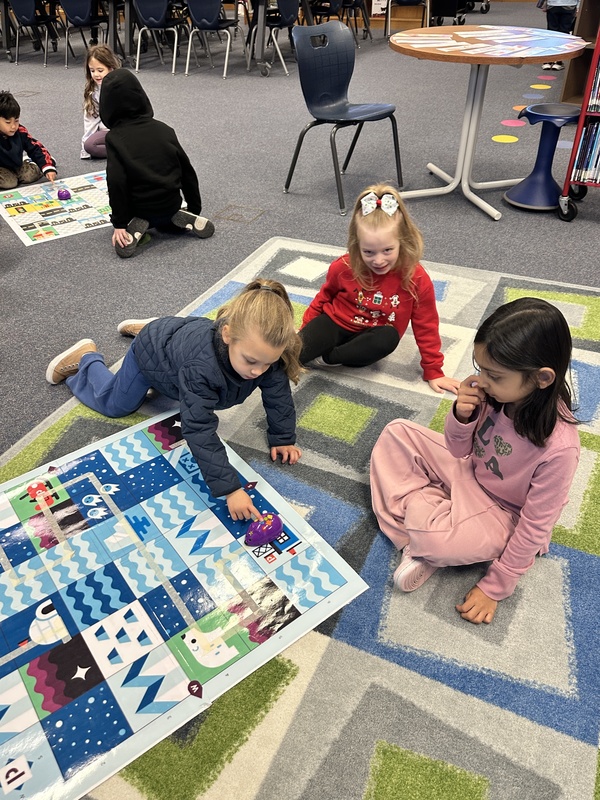
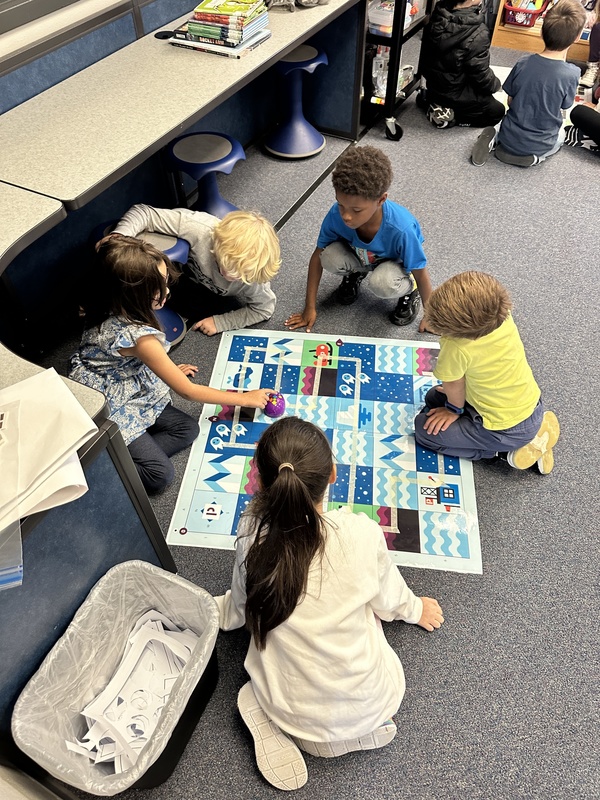
Kinder and 1st grade met in the BBLC over the past two weeks to try their hand at coding. Both classes started with Code & Go mouse and a class challenge. Students were presented with an oversize map and were challenged to work together to code the mouse to get from the "school" to the park on the otherside of the map. They applied map skills using the Compass Rose to give directions of North, South, East, or West to determine which arrows to code the mouse as he moved through the maze. Students also applied math number line skills to help figure out the travel distance. During the second week, Kindergartens were able to work in small groups to practice coding their mice through different maps. First graders were given the chance to use a different robot called Botley. In small groups, first graders took turns laying out coding cards and then programing their Botley along the designed pathways.
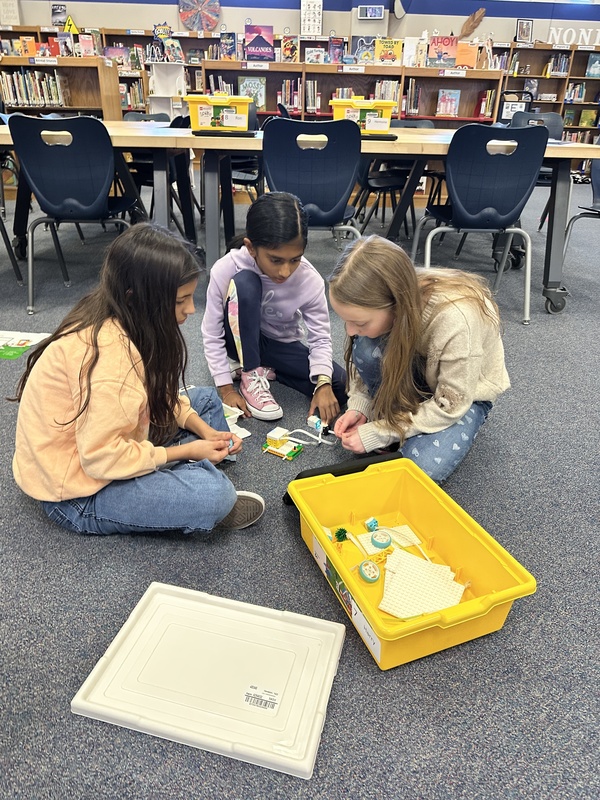
Fifth graders met in the BBLC twice this week to work with LEGO Spike for their STEAM coding lessons. Supporting their science lessons on light energy students created two builds using the light block. During the second challenge, students created their own "lamp" that needed to be coded for a specific season. After discussing Earth's Rotation and Revolution and it's effect on daytime/nightime throughout the year, students calculated the average number of hours of darkness for their favorite season. Using that information, they coded their lamps to turn on and off their specific number using a conversion of seconds for hours. Some students extended their code to include a color sensor that when shown "black" their lamp would turn on.
Remember coding develops cognitive skills like problem solving, logical reasoning, creativity, and perseverance. They learn how to break down complex problems, building resilience through trial and error. And finally, coding allows students to become creators of technology, not just users and consumers. To extend their learning at home, below you'll find some of the resources provided. Please review any option to make sure it is a good fit for your student.
2nd - 5th Tinkercad Block Coding
3rd - 5th Ozobot online Blockly